Is Shopify Good For Artists? [2026 Review By An Artist]


Disclosure: Some of the links in this post may be affiliate links. If you click on the link and make a purchase, I will receive an affiliate commission at no extra cost to you. As an Amazon Associate I earn from qualifying purchases.
Is Shopify good for artists?
Shopify

Shopify Review for Artists

Overall Rating
4.6
4.6/5
Ease of Use
5/5
Themes
4.5/5
eCommerce
5/5
Blogging & SEO
4/5
Pricing
4.5/5

Is Shopify good for artists?

Shopify is known as the eCommerce platform on the market. Everyone who wants to sell something goes to Shopify. 

But does that mean that Shopify is also a good choice for artists who want to sell prints, originals, and other artwork?

To help you make an informed decision, I’ve tested and reviewed Shopify across all important aspects, from website builder and templates to eCommerce features and pricing plans. 

By the end of this review, you know exactly what you can expect from the selling platform and whether it’s a good fit for your creative needs.

With that said, let's dive straight into this Shopify review for artists!

Ease of Use

5/5
5/5

Shopify Review: User-Friendliness

Is Shopify easy to use for artists without web design experience?

Shopify makes it truly easy for anyone to set up their store on the platform—whether you already have experience selling online or you’re just starting out. The onboarding process is really simple and straightforward.

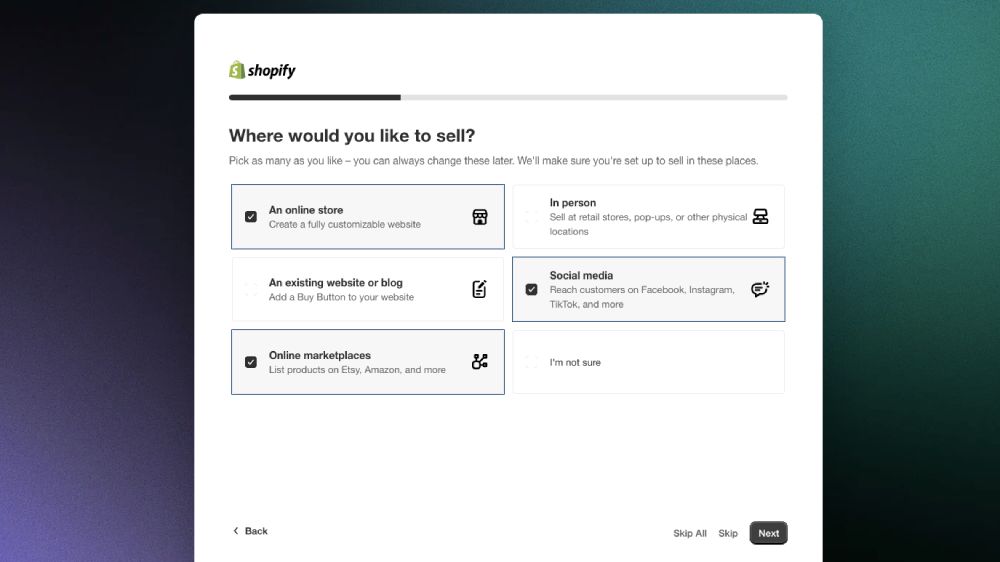
When you sign up for a free Shopify trial, you can answer a quick questionnaire to help you get started. You can select how you want to sell (online or in person), on social media, online marketplaces, or via an existing website or blog. 

Shopify's onboarding process is simple and straightforward, starting with a questionnaire on how you want to sell.

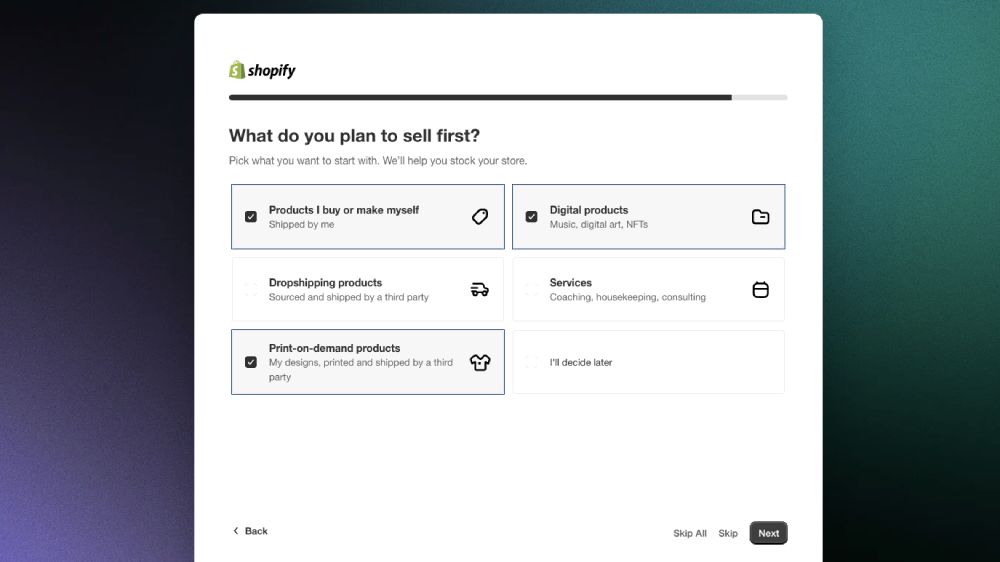
After that, you can pick what type of products you’re planning to sell: physical or digital products, print-on-demand or dropshipping products, and you can even choose to sell services and similar offerings. 

If you don’t want to answer the questions, you can skip the entire questionnaire or just those parts you’re not yet sure about.

You can pick what type of products you're planning to sell—or skip the questionnaire partially or completely.

With the questionnaire completed (or skipped), you’re good to set up your shop. Shopify is primarily an eCommerce platform, that’s why you’re directly taken to the store setup.

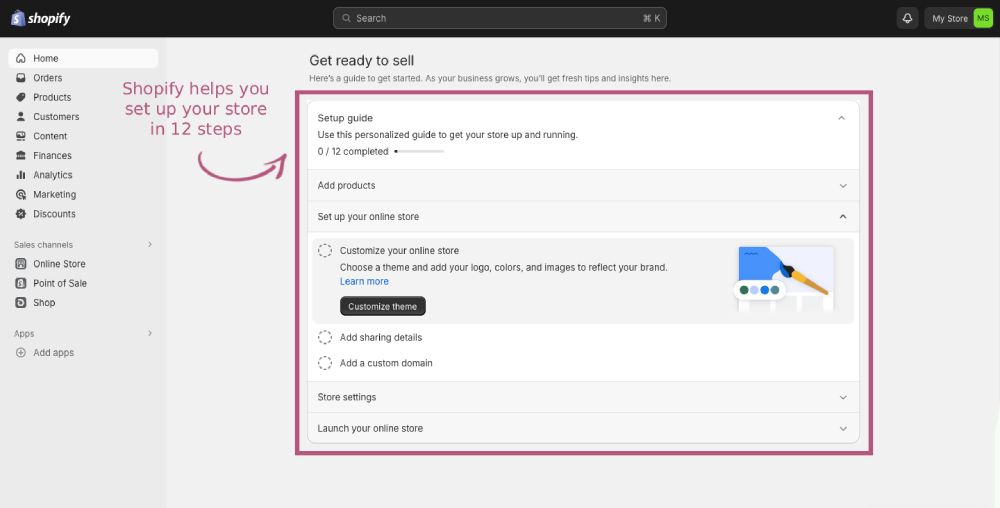
The setup guide helps you set up your store in 12 easy steps, from adding products, customizing your store, adding a custom domain, straight to sending your products live—and all that happens with just a couple of clicks!

The setup guide helps you set up your Shopify store in 12 easy steps.

Themes

4.5/5
4.5/5

Shopify Review: Website Themes for Artists

Is Shopify good for artists to showcase their portfolio?

The theme is the heart and soul of your website. It determines what your site looks like, how your portfolio is presented, and what your storefront looks like. 

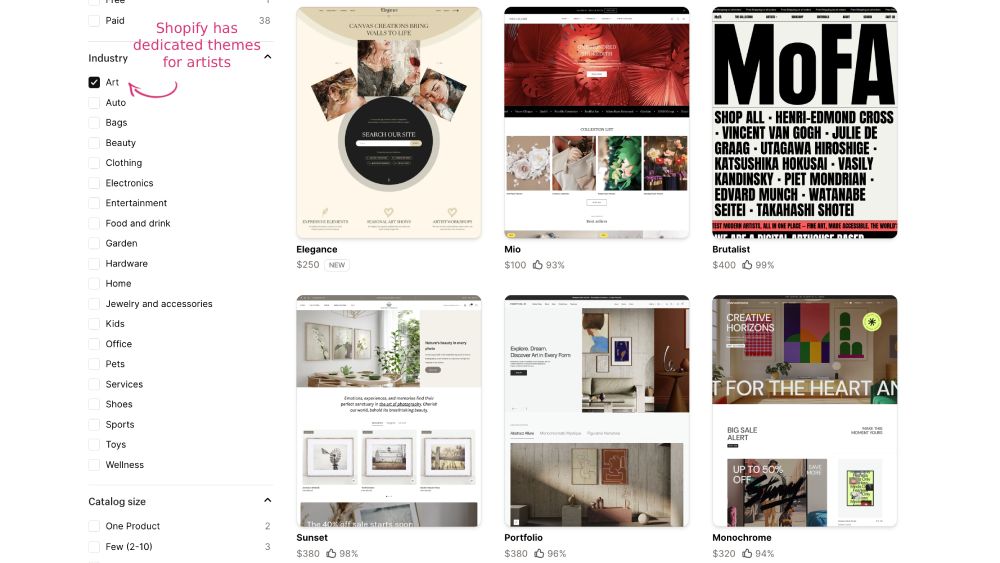
At the time of writing, Shopify offers over 1,000 themes in total, across different categories. There’s a dedicated category for Art themes that currently features around 40 options to choose from. 

This is nowhere near the selection of art-related themes you can find on platforms like Pixpa and Squarespace. Nevertheless, all Shopify themes are modern, clean, and visually appealing. 

They make your site look good both on desktop and mobile devices and put your artwork in the limelight!

→ Squarespace vs Shopify For Artists: Which Is Better For Selling Art?

Shopify has a dedicated category for Art themes that currently features around 40 options to choose from. 

what is the best Shopify theme for artists?

You can start with any theme and easily switch to another later on if the design no longer fits your needs. As opposed to Squarespace, Shopify allows you to change themes even after you’ve added content. 

→ Squarespace vs Shopify For Artists: Which Is Better For Selling Art?

The only thing to keep in mind is that most Shopify themes are paid, so you want to make your choice wisely to avoid paying twice. ʕᴖᴥᴖʔ

Here are some beautiful Shopify themes that I particularly like for artist websites: 

  • Mio (clean, with lots of white space)
  • Okinawa (feminine theme with cool fonts)
  • Darkroom (dark theme that makes your artwork pop)
  • Clay (all-purpose theme with beautiful design)
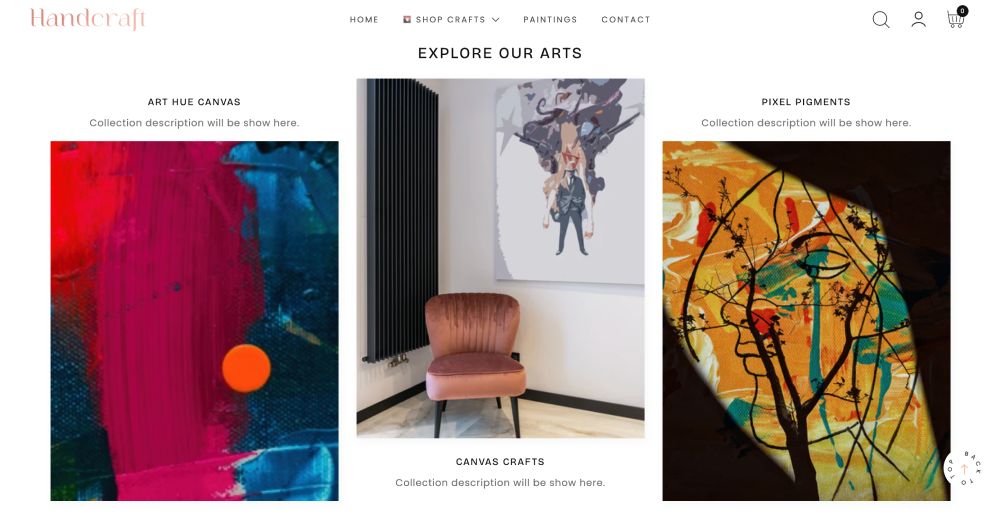
Clay is a beautiful all-purpose theme for artists.

eCommerce

5/5
5/5

Shopify Review: eCommerce Features

Is Shopify good for artists to sell their work?

This is where Shopify excels. Shopify is known as the eCommerce platform on the market—for a reason.

Shopify has hands-down one of the best sets of eCommerce feature out there. You can sell unlimited products on all plans, and this includes both physical products (like art prints and originals) and digital products (like wallpapers, licensed images, eBooks), as well as services, such as courses and coaching programs.

By linking print-on-demand providers like Printful and Printify to your Shopify store, you can conveniently drop-ship your prints.

Plus, you can sell all products in different variants, meaning different print sizes, print media, limited editions, and you can organize them into categories, tags, and more.

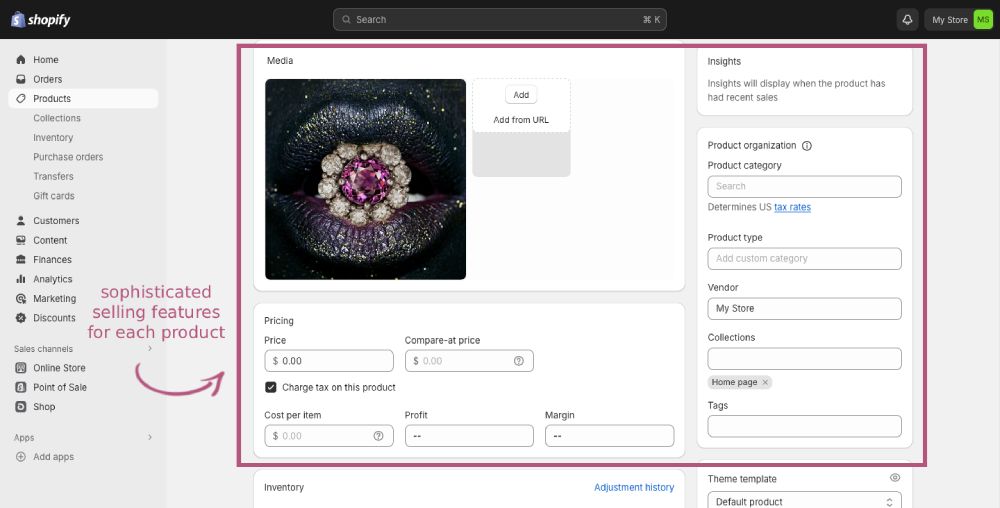
Shopify has one of the best sets of eCommerce feature available.

Apart from that, Shopify gives you access to in-depth analytics and sales reports. You can see exactly which artworks are performing best, which products are underperforming, and how your customers behave on your site.

For example, you can track where your visitors come from (Instagram, search engines, direct traffic), which pages they view before purchasing, and what your overall conversion rate looks like.

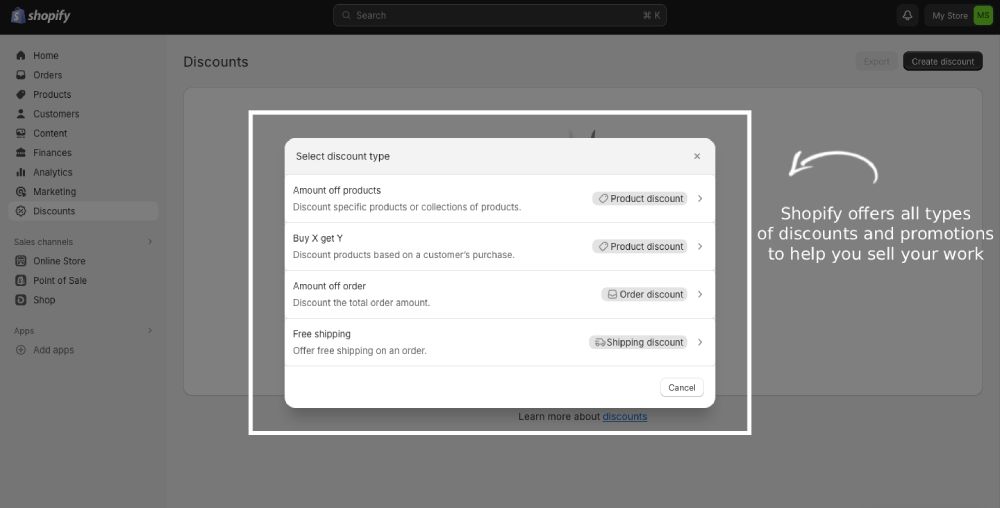
What’s more, you can create all types of sophisticated discount and promo codes to boost sales in your art shop. This includes percentage discounts, fixed-amount offers, free shipping deals, or even time-limited promotions to create urgency.

Needless to say to say that you’ll get access to common global payment gateways so you can easily sell your artwork internationally. Customers can choose whether they want to pay with credit cards, PayPal, or mobile options like Apple Pay and Google Pay, or other local payment options, which removes a lot of the friction from selling across borders.

Shopify lets you create all types of sophisticated discount and promo codes to boost sales in your art shop.

Blogging & SEO

4/5
4/5

Shopify Review: Blogging Features

Is Shopify good for artists to start a blog?

Shopify is not the go-to place for bloggers (that’s WordPress), but the platform comes with solid blogging features. 

The good thing is that the blog is tightly integrated with your store, which allows you to send traffic from your posts directly to your offerings. 

Every Shopify theme comes with a premade blog out of the box. You don’t need any plugins or external tools to start blogging. 

You can create an unlimited number of blog posts and easily format them with Shopify’s editor, adding images and videos, or inserting product links.

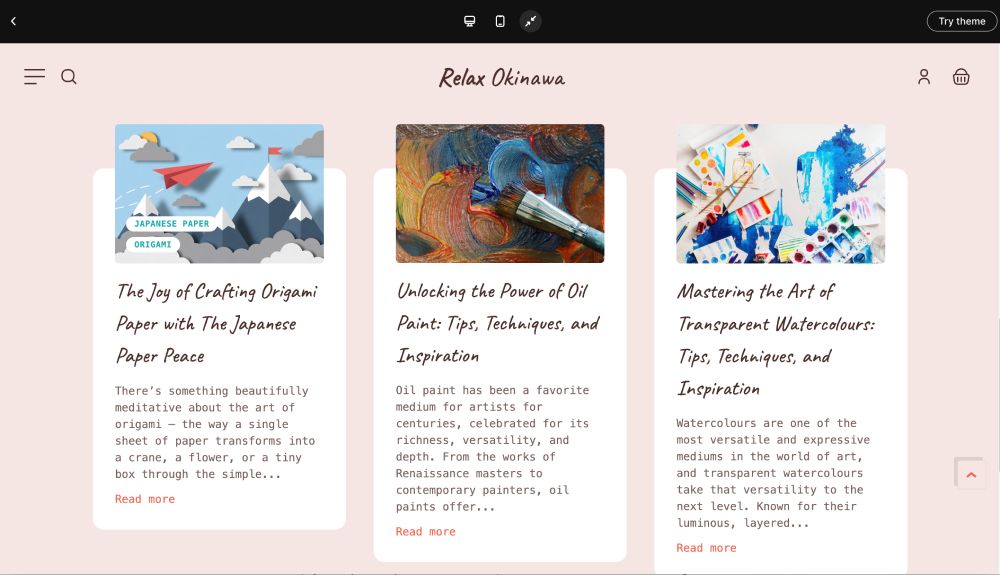
The Okinawa theme comes with a beautiful pre-designed blog for artists.

As compared to WordPress, Shopify offers limited design flexibility and fewer advanced content features. However, the main reason Shopify includes blogging is to help your content rank in search engines and drive organic traffic to your product pages. 

And that absolutely works. 

You can optimize your posts for SEO through meta titles and descriptions, editable URLs, proper heading structure, image alt text, and so on. Plus, all Shopify themes are fully mobile-responsive.

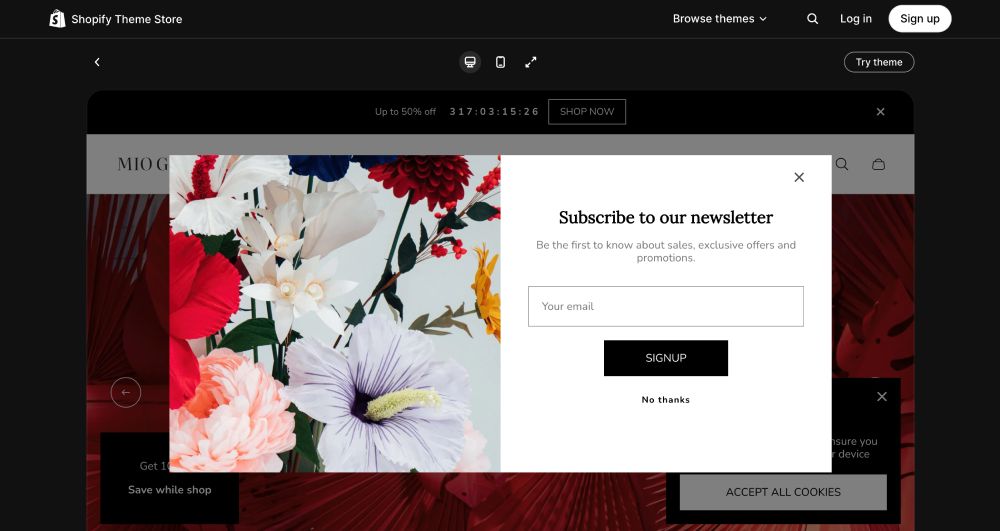
What’s even better, ready-made newsletter opt-ins pop up when visitors land on your page and help you capture leads and build an email list without you having to set up complex forms or integrations yourself.

Once someone joins your list, Shopify’s built-in email marketing tools allow you to stay in touch, promote new artwork, and nurture long-term relationships with your audience.

→ How To Blog As An Artist FOR SUCCESS

Ready-made newsletter opt-ins pop up when visitors land on your page. Here an example of the Mio theme.

Pricing

4.5/5
4.5/5

Shopify Review: Pricing Plans

Does Shopify offer good value for money for artists?

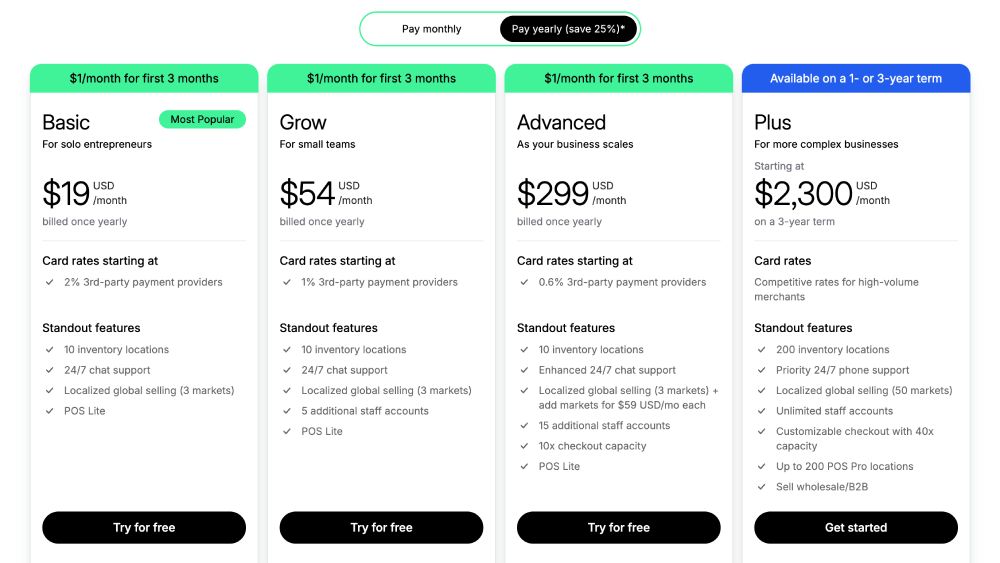
Shopify has four pricing plans; two for individuals or small businesses, and two for large sellers. For most artists, the Basic plan will be more than enough to sell their work on a professional level.

It costs $19 per month (billed annually) and allows you to sell an unlimited number of products in your Shopify store and across different sales channels (marketplaces, social media, etc.).

You’ll get access to in-depth analytics for insights into your store performance, 24/7 chat support, web hosting, an SSL certificate, and all marketing features.

Shopify pricing might seem expensive at first glance, but when you compare it to other platforms like Squarespace or Wix, you’ll notice that Shopify provides really good value for money. 

Squarespace‘s cheapest plan, for example, costs $12 per month. It lets you sell, but to get the full set of eCommerce features, you’ll have to upgrade to $17 per month. That’s only two dollars less than Shopify, yet Shopify offers more advanced selling features. 

On Wix, you can’t even sell on their cheapest plan for $17/month. You’ll have to pay a whopping $29 for basic eCommerce features. ◉_◉

The only website builder for artists that lets you sell at more affordable prices is Pixpa. However, if you want to sell your artwork on a professional level with the best of the best eCommerce features, then Shopify is the way to go.

» To see if Shopify is the right choice for you, you can always start a free 3-day trial, and then pay only $1 per month for three months!


Shopify Pricing Plans

Shopify pricing plans
Shopify offers excellent value for money for artists who are serious about selling their work.

Overall Rating

4.6/5
4.6/5

Shopify Review: The Verdict

Is Shopify good for artists overall?

Shopify is one of the best platforms if your main goal is to sell your artwork professionally and at scale.

It strikes a great balance between ease of use and powerful functionality. Getting your Shopify store up and running only requires a couple of clicks and can be done by anyone, even without prior web design experience.

Where Shopify really stands out is its selling capabilities. It offers one of the most advanced eCommerce features on the market to help you turn your art into a business.

The blogging and SEO features are solid and do exactly what they’re supposed to do: drive traffic and convert visitors into buyers. While they’re not as advanced as WordPress, they’re more than enough for most artists.

In terms of design, Shopify offers modern, high-quality themes that showcase your artwork beautifully. While platforms like Squarespace or Pixpa may offer more artistic templates, Shopify still delivers a clean, professional look and focuses on sales.

As for pricing, it may seem a bit higher at first, but considering everything you get, it offers excellent value for money for artists who are serious about selling their work.

Shopify

Shopify Review for Artists

Overall Rating
4.6
4.6/5
Share on pinterest
Pinterest
is Shopify good for artists to sell their work
AngieG. – The Person behind the Pictures
HI Y'ALL!  
My name is Angie and I’m a self-taught digital artist. On this blog, I am sharing my knowledge and educational resources to help you build a website for your art. My desire is to show you that you don’t need to be a coder to create a website. All you need is the desire to learn and the get-up-and-go to get started!
LET'S CONNECT:
SHARE THIS POST:

Leave a Reply